PRACTICAL JAPANESE · PROCEDURES
Check first, put away second: clear sequences with てから and 前に
A full paired reading about a fictional study-room handover, with furigana, event-order cards, explained exercises and a transfer task.
Which action happens first?
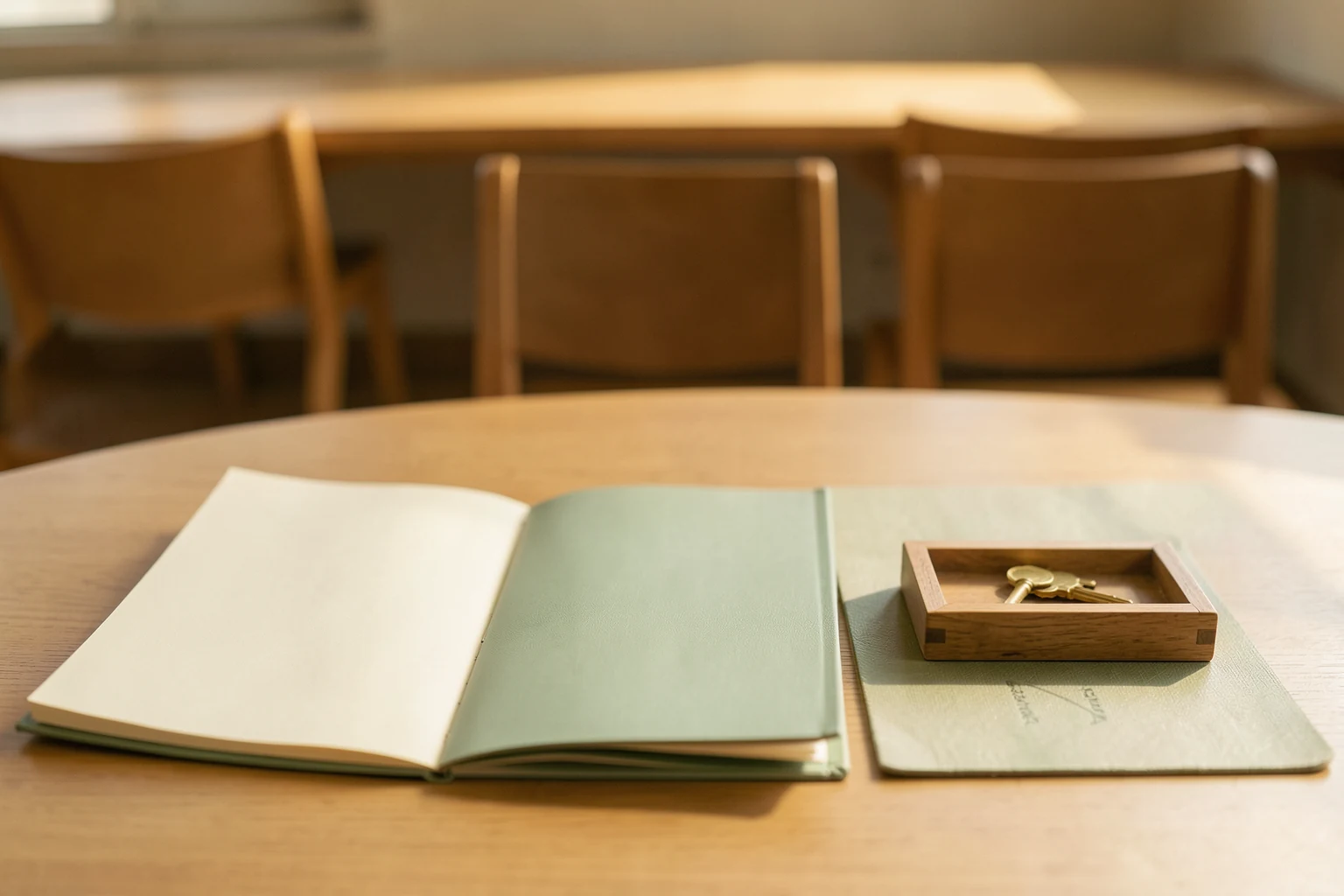
A small study group has borrowed a room for an evening. One person is collecting practice sheets, another is putting the chairs away, and someone needs to return the key. Nobody needs a complicated speech. They do need to agree about what happens first. A sentence can contain all the right nouns and still send someone through the steps in the wrong order.
This reading follows that fictional group through a few ordinary decisions. You will compare two ways of describing an order, read a complete exchange, and explain a procedure to another learner. The target is not speed. It is being able to hear a sentence and reconstruct the order of events without translating each word separately. No real building or workplace procedure is being prescribed.
どちらを先にしますか
小さな勉強会で、夕方の部屋を借りました。練習の紙を集める人、椅子を片付ける人、鍵を返す人がいます。難しい話は必要ありません。でも、何を先にするかは確認する必要があります。正しい単語を並べても、順番が違えば、伝えたい予定になりません。
この読み物の場面は架空です。二つの順番の表し方を比べ、会話を読み、自分でも手順を説明します。速く答えることより、出来事の順番を理解することが目標です。実際の建物や仕事の規則を指示するものではありません。
Start with two separate cards
Write “check the practice sheets” on one card and “put them in the folder” on another. Arrange the cards in the order you intend: check, then put away. Keep them visible while you read the Japanese. This gives you a meaning to test rather than an English word to hunt for.
Now imagine the folder is already closed. Has the checking happened? The sentence must answer that question clearly enough for this small situation. You do not have to explain every earlier action in the room. You only need to connect these two events. If your partner lays the cards in the reverse order, ask which part of your sentence led to that reading before correcting their verb form.
二枚のカードから始める
一枚目のカードに「練習の紙を確認する」、二枚目に「フォルダーに入れる」と書きます。確認して、それから入れる順に並べてください。日本語を読む間も、カードを見えるところに置きます。訳語を探す前に、伝えたい意味を決めましょう。
もうフォルダーが閉じていると想像してください。確認は終わっていますか。この場面では、その順番が分かる文が必要です。相手がカードを逆に並べたら、どの表現からそう考えたか聞いてみましょう。
てから: name the first action first
In V1てから、V2, the event in the first part comes before the event in the second. For our cards, try 紙を確認してから、フォルダーに入れます. The checking comes first; putting the papers away follows it. Here the same person does both things, so we can concentrate on the order rather than introduce two different subjects.
Say the sentence once while moving the cards. Then cover the cards and describe the order in your own language. If you can explain it but cannot yet produce the Japanese form, that is useful information: your next practice can focus on the form. If the order itself is unclear, return to the events before repeating the sentence faster.
「てから」で先の行動を先に言う
V1てから、V2では、最初の部分の出来事が、次の部分の出来事より先です。
紙を確認してから、フォルダーに入れます。
先に確認し、その後で紙を入れます。ここでは同じ人が両方をするので、まず順番に注目できます。カードを動かしながら読んでください。次にカードを隠し、自分の言葉で順番を説明します。意味が分かっていて形だけが出ないのか、順番そのものが分からないのかを分けましょう。
Make the forms visible
The pattern needs a verb in its て-form before から. It is not a rule that you can attach て to every dictionary form. In the examples here, 確認する becomes 確認して, 読む becomes 読んで, and 書く becomes 書いて. The voiced で in 読んでから belongs to the same family of forms.
Build three small cards: dictionary form, て-form, complete phrase. For 読む, they are 読む, 読んで, and 読んでから. Check the middle card before trying to remember a long sentence. This lesson assumes some familiarity with て-forms; it is not a complete conjugation chart. An unfamiliar verb is a reason to check a reliable verb reference, not to guess from its final letter.
形の違いを見えるようにする
「から」の前は動詞のて形です。辞書形にいつも「て」を足せばよいわけではありません。「確認する」は「確認して」、「読む」は「読んで」、「書く」は「書いて」になります。「読んでから」の「で」も、ここで使う形です。
「辞書形」「て形」「全体」のカードを作りましょう。「読む」「読んで」「読んでから」の順です。長い文を覚える前に、真ん中の形を確かめます。これは全ての活用を説明する表ではありません。知らない動詞は、信頼できる資料で確認してください。
前に: the later action becomes the reference
Now describe the same intention from the other end: フォルダーに入れる前に、紙を確認します. Before putting the papers in the folder, you check them. The action mentioned before 前に is the later reference event. The action in the main clause happens earlier. That is why following the written order of the nouns alone will not work.
Leave the cards exactly where they were. Changing the sentence pattern has not changed the plan. Point to “put away” when you say 入れる前に, then point back to “check” for 確認します. You can rehearse quietly with two fingers instead of cards. The movement is a temporary aid; the goal is to understand the relationship when the aids are gone.
「前に」では後の行動を基準にする
同じ予定を、反対側から説明してみます。
フォルダーに入れる前に、紙を確認します。
「前に」の前で言う行動は、後でする基準の行動です。主な文の「確認します」が先です。単語が出てくる順に行動するのではありません。カードは動かさず、「入れる前に」で後のカードを、「確認します」で先のカードを指してください。文の形が変わっても、予定は同じです。
Dictionary form does not mean future here
Before 前に, use the dictionary form in this basic construction. The ending of the main clause can still describe a past event: 昨日、帰る前に、机を片付けました. The tidying happened yesterday, before leaving. 帰る does not turn that whole sentence into a future plan.
Notice what you would actually need to report after the study group: when the event happened and which action preceded which. Do not try to make every verb look past merely because the story is past. First identify the pattern; then check the final predicate. You can practise with a pair of otherwise identical reports, one ending in 片付けます and one in 片付けました, while keeping 帰る前に unchanged.
辞書形でも、未来の話とは限らない
この基本の形では、「前に」の前は辞書形です。主な文の終わりでは、過去のことも表せます。
昨日、帰る前に、机を片付けました。
片付けたのは昨日です。「帰る」があるからといって、文全体が未来になるわけではありません。過去の話だから全ての動詞を過去形にする、と考えないでください。まず文の形を確かめ、それから最後の述語を見ます。「帰る前に」はそのままで、文末だけを比べてみましょう。
Two sentences, one practical order
Use the table as a meaning check. Read a row, hide its order column, and reconstruct the two cards. Then compare the rows. The first sentence begins by naming the earlier action; the second begins with the later action as its reference. Both can describe check first, put away second.
| Sentence | Event order |
|---|---|
| 紙を確認してから、入れます。 | Check → put away |
| 入れる前に、紙を確認します。 | Check → put away |
These short examples leave “the folder” implicit after the shared context. When you introduce a new object or listener, name it. Omitting a noun is useful only when the listener can recover it. Grammar practice should not train you to produce sentences whose missing context only the exercise author knows.
二つの文、同じ実際の順番
一つずつ読んで、順番の列を隠し、カードを並べてください。それから二つの文を比べます。最初の文では先の行動を先に言い、次の文では後の行動を基準にしています。実際の順番は同じです。
| 文 | 順番 |
|---|---|
| 紙を確認してから、入れます。 | 確認する → 入れる |
| 入れる前に、紙を確認します。 | 確認する → 入れる |
ここでは、前の場面からフォルダーに入れると分かります。初めて聞く人には、何をどこに入れるかも伝えましょう。省略した言葉が相手に分かるかどうかが大切です。
Read the whole room conversation
Two learners are finishing their fictional session. Read both roles before deciding what the speakers will do. A is checking the sheets; B is asking about the key. The room name and people are invented, and the exchange is language practice rather than a closing checklist.
A: 紙を確認してから、フォルダーに入れます。
B: 鍵は、いつ返しますか。
A: 部屋を出てから、受付で返します。
B: 分かりました。帰る前に、机も片付けますね。
Tell the story without quoting it. The papers are checked before being put away. The key is returned at reception after leaving the room. Tidying the desk happens before going home. The conversation does not state every relationship between all three tasks; do not invent a complete timetable from information that was never supplied.
部屋での会話を通して読む
架空の勉強会が終わるところです。Aは紙を確認し、Bは鍵について聞いています。両方の役を読んでから、何をするか考えてください。実際の施設の片付け表ではありません。
A:紙を確認してから、フォルダーに入れます。
B:鍵は、いつ返しますか。
A:部屋を出てから、受付で返します。
B:分かりました。帰る前に、机も片付けますね。
紙は確認が先で、入れるのが後です。鍵は部屋を出た後、受付で返します。机は帰る前に片付けます。ただし、三つの仕事の全ての関係が説明されているわけではありません。書かれていない時間割まで作らないでください。
Ask about the uncertain link
A listener does not have to pretend that an incomplete procedure is complete. If you cannot tell whether the papers must be checked before the chairs are moved, ask about that particular relationship. One useful practice question is 椅子を片付ける前に、紙を確認しますか. It asks whether the checking comes before tidying the chairs.
Compare this with a vague “What do I do?” The narrower question gives your partner a specific connection to confirm or correct. It does not mean that narrower questions are always socially better; context and urgency matter. Here they let you test the grammar without guessing someone’s intentions. In a real setting, follow the actual responsible person’s instructions rather than our fictional example.
分からない関係を聞く
手順が分からないのに、分かったふりをする必要はありません。紙の確認と椅子の片付けの関係が分からなければ、その部分を聞きます。
椅子を片付ける前に、紙を確認しますか。
「何をしますか」よりも、確かめたい関係がはっきりしています。ただし、いつでも細かい質問がよい、と言うわけではありません。場面によります。ここでは、相手の意図を勝手に決めずに文法を練習します。実際の場所では、担当者の指示を確かめてください。
Order is not duration, permission or cause
“After checking” tells us a relationship between events. It does not tell us how many minutes the check takes, who has permission to use the room, or why the papers need checking. Those may all matter, but they need their own information. Keep the lesson’s claim small enough to be accurate.
Also avoid learning てから as “immediately, with no possible gap.” In the examples here the second step follows the first in a connected procedure, but the form alone does not supply a stopwatch reading. If the exact gap matters, state it separately and confirm it. Our table is an ordering aid, not a timed record. This distinction helps you ask for missing details instead of treating a grammar pattern as a whole operating manual.
順番だけでは分からないこと
「確認してから」は出来事の関係を表します。確認に何分かかるか、誰が部屋を使ってよいか、なぜ確認が必要かは、この形だけでは分かりません。大切な情報でも、別に伝える必要があります。
また、「てから」を、いつでも時間の間が全くないという意味で覚えないでください。ここではつながった手順ですが、何秒後かまでは表していません。正確な間隔が必要なら、別に説明して確認します。表は順番の補助で、時間を測った記録ではありません。
Past reports keep the same relationship
Imagine writing a short report the next morning: 紙を確認してから、フォルダーに入れました. Both actions have happened; the final 入れました makes this a past report. You can also say フォルダーに入れる前に、紙を確認しました. The order remains check, then put away.
Try changing only the final verb of each sentence from the polite past to the polite non-past. The intended sequence stays the same, although whether you are reporting or planning changes with the surrounding context. This is a more useful test than memorizing an isolated English label for each form. Ask your partner to tell you both the sequence and whether your sentence sounds like a report in the little context you supplied.
過去の報告でも関係は同じ
翌朝の短い報告を想像します。「紙を確認してから、フォルダーに入れました」。もう両方をしました。最後の「入れました」で過去の報告になります。「フォルダーに入れる前に、紙を確認しました」とも言えます。順番は同じです。
最後の動詞だけを「入れます」「確認します」に変えてみましょう。順番はそのままですが、場面によって報告か予定かが変わります。相手には、順番と、与えた場面でどんな話に聞こえるかの両方を説明してもらいましょう。
Five decisions before you open the answers
For each item, choose the expression that preserves the stated plan. Write the event order as well as the missing form. Do not use the length of the blank as a clue; some answers have different lengths. The point is the relationship, not a hidden spelling puzzle.
- Check first, then put the papers away: 紙を確認[ ]、入れます。Choose してから or する前に.
- Tidy the desk before leaving: 帰る[ ]、机を片付けます。Choose 前に or てから.
- You wrote first, then read the message. Does 読んでから、書きました preserve that order?
- Yesterday you tidied before leaving. Choose 帰る前に or 帰った前に before 片付けました.
- Read first, then write. Can 書く前に、読みます describe that plan?
Explain one answer aloud before opening the explanation. A confident answer without a reason can still hide a reversed sequence.
答えを見る前の五つの判断
決められた予定を変えない形を選んでください。空欄の長さではなく、出来事の順番を考えます。形と一緒に、先と後も書きましょう。
- 先に確認し、後で入れます。紙を確認[ ]、入れます。「してから」「する前に」から選びます。
- 帰る前に机を片付けます。帰る[ ]、机を片付けます。「前に」「てから」から選びます。
- 先に書き、後で読みました。「読んでから、書きました」で同じ順番ですか。
- 昨日、片付けてから帰りました。「帰る前に」「帰った前に」のどちらを「片付けました」の前に置きますか。
- 先に読み、後で書きます。「書く前に、読みます」で表せますか。
説明を見る前に、一つの理由を声に出しましょう。自信があっても、順番が逆かもしれません。
Answers that show the event order
Open the five answers and reasons
- してから. The checking is the first event. The complete first phrase is 確認してから, not 確認するてから.
- 前に. Leaving is the later reference event. Tidying takes place before it; attaching てから to the unchanged dictionary form 帰る would not form the target pattern.
- No. 読んでから、書きました says read first, write second. For the stated plan use 書いてから、読みました.
- 帰る前に. The dictionary form stays before 前に even in this past report. The final 片付けました carries the past report here.
- Yes. Writing is the later event named before 前に. Reading happens earlier, so the order is read, then write.
If you missed an item, name the kind of problem: verb form, event order, or missing context. Those need different kinds of practice. Redrawing the same two cards can be more useful than copying a wrong sentence ten times.
順番が分かる答えと理由
五つの答えと理由を開く
- してから。確認が先です。全体は「確認してから」で、「確認するてから」ではありません。
- 前に。帰るのが後の基準です。片付けはその前です。「帰る」にそのまま「てから」を付けても、この形にはなりません。
- いいえ。その文では読むのが先です。決められた予定なら「書いてから、読みました」です。
- 帰る前に。過去の報告でも「前に」の前は辞書形です。ここでは最後の「片付けました」が過去を表します。
- はい。「前に」の前の「書く」が後で、読むのが先です。
間違えたら、形、順番、足りない場面のどれが問題だったか考えます。同じ誤文を何度も写すより、カードをもう一度並べる方が役に立つこともあります。
Repair the instruction without changing the plan
A learner wants the papers checked first, but writes 紙を入れてから、確認します. Simply polishing the sentence will not fix the intention: it currently puts the papers away before the check. Rewrite it in two different ways, one with てから and one with 前に. Keep the same person and the same two actions.
Compare two repairs
紙を確認してから、フォルダーに入れます。
フォルダーに入れる前に、紙を確認します。
Both repairs preserve the intended order. Neither adds a deadline, a rule about confidential papers, or a permission to use someone else’s folder. That restraint matters: a correction should fix the error you identified without quietly inventing a different job for the speaker. Ask a partner to reverse the cards deliberately and explain why their new sentence now describes a different plan.
予定を変えずに指示を直す
先に確認したい人が、「紙を入れてから、確認します」と書きました。形だけを整えても、意図は直りません。今の文では入れるのが先です。同じ人と同じ二つの行動で、「てから」と「前に」の文を一つずつ書いてください。
二つの直し方を確かめる
紙を確認してから、フォルダーに入れます。
フォルダーに入れる前に、紙を確認します。
どちらも、決めた順番を保っています。期限や秘密の紙の規則、他人の物を使う許可は加えていません。間違いを直すとき、別の仕事を勝手に作らないようにしましょう。
Write a handover somebody can actually follow
Choose a harmless activity from your own day: reading a notice and writing a question, checking a bag and leaving home, or looking at a map and choosing a route. Use fictional details if the real activity involves personal or workplace information. Write the two actions on cards before you write Japanese.
Give your partner one sentence, not the cards. Ask them to draw the order, then compare it with yours. If they need context, add the missing noun or person instead of assuming a longer grammar pattern will solve everything. Finally, express the same plan with the other target structure. A successful transfer keeps the intended order while changing the sentence’s point of reference; it does not merely replace one connector with another.
相手が分かる引き継ぎを書く
自分の日常から、害のない二つの行動を選びます。お知らせを読んで質問を書く、かばんを確認して出かける、地図を見て道を選ぶ、などです。仕事や個人の情報がある場合は、架空の内容を使いましょう。日本語を書く前に、カードを作ります。
相手には文だけを渡し、順番を描いてもらいます。自分のカードと比べ、情報が足りなければ人や物を加えます。それから、もう一つの形で同じ予定を説明します。ただ接続表現を取り替えるのではなく、基準を変えても意味を保つ練習です。
A small self-check for tomorrow
Tomorrow, start with a fresh pair of events rather than memorizing today’s folder sentence. Describe the order once with てから and once with 前に. Then read your sentences as though another person had written them. Which event would you do first? Does the final verb match a plan or a report in the context you chose?
Only after that meaning check, inspect the forms. Look for a real て-form before から and a dictionary form before 前に. Furigana is available as support, not as a test you must pass by hiding it all at once. Cover readings for familiar words if that helps, but keep enough support to think about the relationship between events. A short explanation in your own words is better evidence than a fast guess.
翌日の小さな確認
翌日は、今日のフォルダーの文を覚える代わりに、新しい二つの出来事を選びます。「てから」と「前に」で一回ずつ説明し、他人の文だと思って読み直してください。何を先にしますか。文末は、選んだ場面の予定か報告に合っていますか。
意味を確かめてから、形を見ます。「から」の前はて形、「前に」の前は辞書形です。振り仮名は補助です。全てを一度に隠す必要はありません。必要な読みを残し、出来事の関係を考えましょう。速い当て推量より、自分の言葉で説明することを大切にします。
Where this fits in Manabi Kōbō
This reading extends the existing curriculum’s connected-action practice and its distinction between “before doing” and “without doing.” It does not replace those lessons. If forming 読んで or 書いて is still difficult, return to the て-form material before increasing the length of your procedure. If you confuse “before checking” with “without checking,” compare the intended events rather than treating both as the absence of a check at some moment.
The colored spans mark a few teaching targets, not a full automatic analysis of every word. A connector color highlights the sequence link, and verb color highlights selected forms. The examples do not claim that は always marks a grammatical subject. Keep your own notes limited to fictional or non-sensitive activities when using a shared screen or learning session.
Manabi Kōbōでの次の練習
これは、既存のカリキュラムの「て形で行動をつなぐ」練習と、「する前に」「しないで」の違いを広げる読み物です。元のレッスンの代わりではありません。「読んで」「書いて」が難しければ、長い手順に進む前にて形を復習しましょう。
色は、いくつかの学習上の注目点を示すだけです。全ての語の自動分析ではありません。接続の部分や動詞の形を示しています。「は」がいつも主語を示す、と説明しているわけではありません。画面を共有するときは、秘密や個人情報を含まない練習にしてください。
Check your explanation, not just the blank
When you practise with another person, agree on three checks before you start. First, can the listener put the actions in the intended order without seeing your cards? Second, can you build both target patterns with the correct verb forms? Third, can you explain why the second sentence describes the same plan even though it names the later action first? These checks make a useful small record of what you can do.
A mixed result is normal. You might understand the order immediately but need to look up the form of 書く. Mark that as a form question instead of declaring the whole lesson a failure. You might also produce a smooth sentence whose order is wrong. In that case, repeating the correct conjugation is not the first repair: put the cards back on the table and restore the intended relationship.
For a final check, let your partner choose a new pair of actions. Take a quiet moment to decide the order before speaking. Ask the partner to explain what they heard; do not grade yourself only on whether they smiled or nodded. Keep this activity short enough that you can discuss the answer. The evidence you want is a shared understanding of two events, not a count of how many sentences you rushed through.
空欄だけでなく説明を確かめる
相手と練習するときは、先に三つの確認を決めます。カードを見ずに、相手が順番を並べられるか。正しい動詞の形で二つの文を作れるか。後の行動を先に言っても同じ予定になる理由を説明できるか。この三つで、何ができるかを小さく記録できます。
全部が同じようにできるとは限りません。順番はすぐ分かっても、「書く」の形を調べる必要があるかもしれません。それなら形の問題として記録し、レッスン全体が失敗だと決めないでください。反対に、すらすら言えても順番が逆かもしれません。その場合は活用を繰り返す前に、カードで関係を直します。
最後は相手に新しい二つの行動を選んでもらいます。話す前に順番を考え、聞こえた内容を相手に説明してもらいましょう。笑顔やうなずきだけで判断しません。答えを話し合える長さにします。速く何文も言うことではなく、二つの出来事を一緒に理解できたことが、確かめたい結果です。
Sources, authorship and the edge of this lesson
The Japan Foundation materials below support the grammar, rather than any claim about current Japanese workplace customs. The native curriculum supplied the learning context. All room situations, dialogue, practice items and explanations were newly authored for this draft. No actual student, customer or workplace record was used.
- Japan Foundation: Vてから, basic order of two events and the useful same-subject starting point.
- Marugoto Plus: before doing, dictionary form before 前に and the earlier main-clause action.
- Japan Foundation: time expressions, context and the relationship between てから and other after-expressions.
Sources checked on 22 November 2026 UTC. This lesson covers the order of two actions; advanced uses of から and expressions for long-term starting points can wait for a later reading. Written by Codex for ProgreTech with AI assistance.
参考資料、作成者、学習の範囲
下の国際交流基金の資料で文法を確認しました。現在の日本の職場の習慣を説明する資料として使ったのではありません。既存のカリキュラムを学習の背景にし、場面、会話、練習、説明は新しく作りました。実際の学習者、顧客、仕事の記録は使っていません。
- 国際交流基金「Vてから」:二つの出来事の順番、同じ人の行動から始める説明。
- まるごとプラス「前に」:辞書形と、先に行う主な文の行動。
- 国際交流基金「ときの表現」:文脈と、他の「あと」の表現との関係。
資料の確認日は2026年11月22日、UTCです。ここでは二つの行動の順番を学びました。「から」の応用や長い期間の起点は、次の読み物で練習しましょう。ProgreTech向けにCodexがAI支援で作成しました。
Put this idea into practice
Keep reading

Have you tried it before? Talking about experience with 〜たことがあります
A complete paired reading on experience, specific past events and careful follow-up questions, with furigana and explained practice.
Change an appointment in Japanese and confirm the new time
Practise identifying your booking, asking for another time and checking the final arrangement. English and Japanese appear side by side.

Japanese phrases for instructing an AI agent (and meaning it)
An AI agent can now act on your behalf in Japanese. Here is the language to give it one clear request, ask it to confirm before acting, set a limit, and keep a way back.