PRACTICAL JAPANESE
Japanese phrases for instructing an AI agent (and meaning it)
An AI agent can now act on your behalf in Japanese. Here is the language to give it one clear request, ask it to confirm before acting, set a limit, and keep a way back.

What changed: the agent stopped waiting to be asked
On 23 October 2026, Meta launched its personal AI agent Muse in Japan, the first market outside North America. The company's own announcement describes an assistant you talk to in an app, by text or voice, that plans a task, carries out the steps, and keeps working after you close the app. That is a different kind of software from the chatbot you typed questions into a year ago. A chatbot answers; an agent acts. It opens a page, fills in a field, and comes back with a result.
The part that matters for someone learning Japanese is where that agent is heading. Meta says it is working to connect Muse with services many people in Japan already use, naming the marketplace Mercari, the household-finance app Money Forward ME and the ticket seller Ticket Pia. It also says the agent asks for your approval before it sends a message or buys something, that it runs in its own isolated cloud computer, and that it cannot see your password or card details. Treat all of that as the vendor's description of how the product is designed to behave. It is not a result from independent testing, and I have not tested Muse myself.
So the language problem shifts. You no longer only need Japanese to ask a question. You need Japanese to hand over a job that you still want to control: one clear request, a request to check before acting, a named limit, and a way to take it back. That is exactly what this lesson builds, in seven short steps. By the end you will have a repeatable four-line instruction you can say to an agent, or to a colleague, without sounding vague or reckless.
A concrete way to see the difference: a basic chatbot can tell you how to check whether a train is delayed, but an agent with the right tools can open the timetable, check, and come back to say the 8:12 is running late. The shift is not about what a chatbot is — it is about what you gave permission to touch. Meta's announcement describes exactly that kind of follow-through, and it gives ordinary examples — summarising unread email, managing a calendar — rather than abstract ones. Once a tool can touch your calendar, your inbox or your wallet, the words you use stop being a vocabulary exercise and start being a small piece of supervision.
何が変わったか:エージェントは「聞かれるのを待つ」のをやめた
2026年10月23日、MetaはパーソナルAIエージェント「Muse」を日本で提供開始しました。北アメリカ以外で最初の市場です。
アプリの中ではテキストや音声で話しかけ、エージェントは仕事を計画し、手順を実行します。アプリを閉じても続けます。
Metaは、メルカリ、マネーフォワードME、チケットぴあなどのサービスと連携を進めると述べています。重要な操作の前には承認を求めるとされています。これはベンダーの説明であり、独立した検証の結果ではありません。
違いを具体的に見てみましょう。基本的なチャットボットは「電車が遅れているか確認する方法」を教えられますが、適切なツールを持つエージェントは時刻表を開き、確認し、「8時12分の電車は遅れています」と報告できます。変わるのはチャットボットの定義ではなく、あなたが何に触れる許可を与えたかです。Metaの発表は、まさにその「やり切る」動きを説明し、抽象的な例ではなく、未読メールの要約やスケジュール管理といった身近な例を挙げています。道具がカレンダーや受信箱や財布に触れられるようになると、あなたの言葉は語彙の練習ではなく、小さな監督行為になります。
One request at a time: choosing the right “please”
Japanese gives you several ways to ask someone to do something, and each one signals a different relationship between speaker and listener. 〜てください (“do this, please”) is clear and direct — it tells the other person what you want done, no softening. 〜てもらえますか (“could I have you do this?”) brings the other person's willingness into the sentence: it sounds like you are asking rather than telling. 〜ていただけますか places the speaker below the listener, the form you hear at shop counters and service desks. None of these is a fixed ladder you must climb. They are tools you pick for the moment — a brisk instruction, a considerate request, a humble ask.
An AI agent is software, so nobody's feelings are really at stake. That makes it a safe place to practise the choice. Noticing the shape of a request instead of barking a verb will serve you long after you close the app. A useful default: keep 〜てください for plain setup steps, and reach for 〜てもらえますか when you want the agent — or a person — to hear that you are asking, not commanding.
Play with the three in one instruction. Say the goal first, then one request: 「メールの下書きを作ってください。」 (“Please make a draft of the email.”) Then upgrade it: 「メールの下書きを作ってもらえますか。」 Finally, soften it for a person: 「メールの下書きを作っていただけますか。」 Same job, three temperatures. Notice that only the ending moved; the noun and the verb stayed put. That is the part you want to become automatic.
Each form points a different way. 〜てください is straight — an instruction, and useful when clarity is the whole job. 〜てもらえますか leans on the other person's willingness, so it reads as a request. 〜ていただけますか is the most humble of the three, putting the speaker below the listener — natural at a service counter or in a formal email. A short aside: 〜てくれますか is the plainer cousin of 〜てもらえますか, fine with close friends but a little bare with a stranger. If you remember one safe default, make it 〜てもらえますか.
一度に一つのお願い:「ください」を選ぶ
日本語には依頼の言い方がいくつかあり、話し手と聞き手の関係を変えます。「〜てください」は明確で直接的です。「〜てもらえますか」は相手の意思に触れるていねいな言い方です。「〜ていただけますか」は話し手が聞き手より下に立つ形で、店のカウンターでよく聞きます。どれが正解というわけではなく、場面に合わせて選ぶものです。
AIエージェントはソフトウェアなので、感情は関係ありません。それでも、表現を選ぶ練習には最適です。
たとえば、目標をまず伝えます。「メールの下書きを作ってください。」そして、「メールの下書きを作ってもらえますか。」さらに、「メールの下書きを作っていただけますか。」語尾だけが変わり、名詞と動詞は同じままです。この切り替えを自動的にできるようにしましょう。
向きも覚えておきましょう。「〜てください」はまっすぐな指示で、明確さがすべてのときに便利です。「〜てもらえますか」は相手の意思にふれるので、お願いとして伝わります。「〜ていただけますか」は話し手が聞き手より下に立つ言い方で、店のカウンターやあらたまった場面で使います。これらは登るべき固定の階段ではなく、場面に合わせて選ぶ道具です。助けてもらう側として思いやりを示したいとき、そのニュアンスが役に立ちます。補足を一つ。「〜てくれますか」は「〜てもらえますか」のくだけた親戚で、親しい友達には自然ですが、知らない人には少し素っ気ない響きです。安全な基本を一つ選ぶなら「〜てもらえますか」にしましょう。
Ask it to confirm before it acts
The single most useful sentence in this whole lesson is a request to stop and check. In Japanese you build it with 〜前に (“before”) plus 確認 (“checking, reviewing”). 「送る前に確認してください。」 means “Please check before sending.” You can drop this onto almost any action: before sending, before booking, before paying, before deleting. One clause, and you have asked the agent to check before it commits. Whether the agent actually waits for you or just reports what it checked depends on the app, not on the grammar — but saying it clearly is the first step toward staying in control.
Two words will show up again and again in a Japanese agent's interface, and they are worth telling apart. 確認 (かくにん) is checking — looking something over, verifying a fact or a draft. Crucially, the word itself does not mandate a human pause; an agent can 確認 its own logs internally. To ensure you stay in the loop, you must explicitly ask it to wait for your 承認 (approval) before the final act. 承認 (しょうにん) is the word that carries the human sign-off — formally approving so the action may proceed. A screen might ask you to 確認 the details and then 承認 the purchase. Get this straight: 確認 is “review,” 承認 is “green light.” The grammar alone does not enforce a safety control — the app's design does. What the language gives you is the vocabulary to talk about each step clearly, and that clarity is what helps you stay in control.
Here is a clean gated request where you stay in control. 「まず予定を確認してください。それから、私の承認を待ってからチケットを買ってください。」 (“First check the schedule. Then wait for my approval before buying the tickets.”) Three ideas, three verbs, no run-on. まず tells the agent the order. 私の承認を待ってから makes it unambiguous: you are telling the agent to wait for your explicit go-ahead — no room to interpret. This is what a supervised delegation sounds like: the pause is named, and the person who says go is you.
Compare that with a sentence that sounds supervised but is not: 「チケットを買う前に承認をお願いします。」 In this form, 承認をお願いします is the speaker asking the listener for the listener's own approval — you are asking the agent to give its go-ahead, not instructing it to fetch yours. The grammar alone does not tell you who must approve whom. The fix is to name yourself explicitly, as in the first example above. Knowing who is asking whom is the whole game.
Two more forms are worth having ready, and they point in different directions. 〜てもいいですか is a first-person permission question — the understood actor is the speaker, so 「送ってもいいですか」 means “May I send this?” It does not ask the listener to do anything; it asks whether the speaker may act. If you want the agent to stop and wait for you, you already have the tool: 「送る前に、私の承認を待ってください。」 (“Before sending, wait for my approval.”) 〜ないでください asks for restraint — “please don't.” Together the permission and restraint patterns let you say the two things you most want: go ahead, or hold on. 「まだ送らないでください。」 (“Please don't send yet.”) holds the action back until you say otherwise, and it does not pretend the agent itself is asking for anything.
動く前に確認してもらう
いちばん役に立つ表現は、止まって確認を求めるものです。「〜前に確認してください。」は、送信、予約、支払いの前に使えます。エージェントが実際に待つか、確認結果を報告するだけかはアプリ次第ですが、はっきり言うことが制御を保つ第一歩です。
確認は「見る」ことで、それ自体に「人間の許可を待つ」という意味はありません。ソフトウェアがデータベースを確認するだけなら、人間に尋ねる必要はないのです。承認は「許可」で、人間の判断が必要な場面で使われます。この二つの言葉を区別しましょう。文法が安全装置を強制するのではなく、アプリの設計がそうします。言語がくれるのは、各段階をはっきり言葉にできることです。そのはっきりさが、あなたの手を離れないようにしてくれます。
あなたが制御を保つ、はっきりした依頼です。「まず予定を確認してください。それから、私の承認を待ってからチケットを買ってください。」まずが順序を示し、私の承認を待ってからが、あなたの明確な許可を必要とすることを伝えます。これが監督された依頼の形です。
それと比べて、「チケットを買う前に承認をお願いします。」は、話し手が聞き手に聞き手の許可を求めています。つまりエージェントに「あなたの判断で進めていいですか」と尋ねているのです。あなたの許可ではありません。文法だけでは、誰が誰を承認するのか決まらないのです。自分を明示することが解決策です。
もう二つ、すぐ使える形がありますが、向きが違います。「〜てもいいですか」は話し手自身の許可を求める言い方で、「送ってもいいですか」は「(私が)送ってもいいですか」という意味です。聞き手に何かを頼んでいるのではなく、話し手が動いてもよいかどうかを尋ねています。エージェントに止まって待たせたいなら、もう道具は持っています。「送る前に、私の承認を待ってください。」「〜ないでください」は控えてほしいというお願いです。「まだ送らないでください。」で、あなたが言うまで動作を止められます。
Name the object and the limit
A vague instruction wastes everyone's time, including yours. Japanese is excellent at forcing the details into the open, because the particle を marks what the action touches. 「ホテルを予約して」 leaves the object sitting right there in the sentence: ホテル is what gets booked. When you add a limit, you also add a word your listener is listening for. 予算 (よさん) is budget; 期限 (きげん) is a deadline. 「予算は三万円です。」 is short, plain and impossible to misread: “The budget is thirty thousand yen.”
Then keep the number of moving parts small. 一つずつ means “one at a time,” 一つだけ means “just one.” 「一度に一つずつ進めてください。」 (“Please proceed one at a time.”) is a gift to an agent, because a multi-step task with a checked step after each move is far easier to stop than a single blur of activity. The same habit helps with people: naming one object and one limit sounds calm, while “do whatever seems best” sounds like an invitation to guess.
Here is a limit that also sets a boundary on spending. 「この予算の中で、候補を三つだけ出してもらえますか。予約はまだしないでください。」 (“Within this budget, could you give me just three options? Please don't book yet.”) You named 予算, you capped the output at 三つ, and you closed the door on the action you were not ready for. まだしないでください (“please don't do it yet”) is softer and more precise than a flat “no” — it says later, not never.
Numbers and ranges sharpen a limit fast. 〜まで means “up to,” 〜以内 (いない) means “within,” and 〜だけ means “only.” 「三つまで」 is “up to three,” 「一週間以内に」 is “within one week,” 「これだけ」 is “just this.” Because counters attach to the number, 「三つまで」 reads more naturally to a Japanese listener than a bare “three.” Spend a minute swapping まで, 以内 and だけ onto the same noun and you will feel how each one trims the task a little differently.
目的語と制限をはっきり言う
あいまいな指示は時間を無駄にします。日本語の助詞「を」は、動作が触れるものを示します。「ホテルを予約して」では、ホテルが目的語です。
予算と期限は、大切な制限の言葉です。「予算は三万円です。」は短くて明確です。
「一度に一つずつ進めてください。」は、各手順の後に確認が入るので、安全です。「この予算の中で、候補を三つだけ出してもらえますか。予約はまだしないでください。」
数と範囲は制限をすばやく鋭くします。「〜まで」は上限、「〜以内(いない)」は範囲の中、「〜だけ」は限定です。「三つまで」は「最大三つ」、「一週間以内に」は「一週間のうちに」、「これだけ」は「これのみ」です。助数詞が数に付くので、「三つまで」は裸の「三つ」より日本語の聞き手に自然です。同じ名詞に「まで」「以内」「だけ」を付け替えてみると、それぞれの削り方が少しずつ違うと感じられます。
Keep a way back
Before you let software do something, know how you would undo it — and what you cannot. Japanese gives you two verbs that look similar and are not. 取り消す (とりけす) means to cancel or revoke something still within your reach: a draft, a pending reservation, an order that has not shipped. 元に戻す (もとにもどす) means to restore or return something to a previous state, like undoing a change you just made. A message you drafted but never sent can be 取り消された; a setting you changed can be 元に戻された. If you mix them up, you end up asking to restore an email that never existed. And if you expect 取り消す to pull back something already delivered — a sent message, a completed payment — the verb will not save you. That limit lives in the service, not in the grammar.
Pair those verbs with 履歴 (りれき), which means a log or history. 操作履歴 (そうさりれき) is your activity history — the list of what the agent did and what it plans to do. Meta says a user can review completed and planned operations, so this is a real screen you should learn to find. And for the emergency stop, one line does the job: 「今の作業をやめてください。」 (「Please stop the current task.」) Short, direct, no room to interpret.
A practical habit: read the history before you approve the next action, not after. In Japanese that sounds like 「操作履歴を確認しました。次に進めてもらえますか。」 (“I checked the activity history. Could you go ahead?”) You confirmed, then you authorised, then you released the next step. The approval stays on your side of the sentence, which is exactly where a careful delegation wants it.
Now the honest limit. 取り消す works for cancellable things — reservations, draft messages, pending orders — but it does not pull a sent email back from someone else's inbox, and it does not refund a completed purchase. A message you already sent to another person is not universally revocable, and no Japanese verb changes that. What the language does is let you stop the action before it crosses the line. 「まだ送らないでください」 (“please don't send yet”) is a gate before the point of no return; 「取り消してください」 (“please cancel”) works only while the thing is still yours to cancel. Learn where that line sits in each service you use, and keep your safety clause on the near side of it.
A pair of handier verbs sits here: 〜ておいてください means “please do this in advance,” and 〜ないでおいてください means “please leave it undone.” 「下書きだけ作っておいてください。」 (“Please just prepare a draft.”) pairs beautifully with 「予約はしないでおいてください。」 (“Please leave the booking undone.”) Notice that 中止 (ちゅうし) is a heavier word — stopping an event or a plan mid-flight — while 取り消す revokes a thing that already exists. Choosing between them keeps your instruction precise about what stage you are actually in.
元に戻る道を残す
ソフトウェアに何かを任せる前に、どう取り消すか、そして何が取り消せないかを知っておきましょう。取り消すは、下書きや未発送の注文など、まだ自分の手にあるものを無効にします。元に戻すは状態を戻します。すでに送信済みのメールや完了した支払いは、動詞では取り戻せません。その限界はサービス側にあります。
操作履歴は、エージェントが行ったことと行う予定の一覧です。Metaは、利用者がこれを確認できると説明しています。
「今の作業をやめてください。」は短くて直接的です。「操作履歴を確認しました。次に進めてもらえますか。」
ただし正直な限界があります。取り消すは予約や下書き、保留中の注文など取り消せるものに効きますが、送信済みのメールを相手の受信箱から取り戻すことはできず、完了した購入を払い戻すこともできません。日本語の動詞がそれを変えるわけではないのです。言語ができるのは、行動が線を越える前に止めることです。「まだ送らないでください」は引き返せなくなる前の関門であり、「取り消してください」はまだ自分の手にある間だけ有効です。各サービスでその線がどこにあるかを知り、安全策を線の手前に置きましょう。
さらに便利な動詞の組があります。「〜ておいてください」は「前もってやっておいて」という意味で、「〜ないでおいてください」は「やらずにそのままにしておいて」という意味です。「下書きだけ作っておいてください。」は「予約はしないでおいてください。」とよく合います。「中止(ちゅうし)」は行事や計画を途中で止める重い語で、「取り消す」はすでにあるものを無効にする語です。使い分けると、どの段階にいるかを正確に伝えられます。
Make it sound natural, not textbook
Once the grammar works, the next job is to sound like a person. A helpful softener is 〜のですが, which trails off slightly and gives the other side somewhere to respond. Instead of a hard 「これはできません。」 (“This can't be done”), say 「これは少し難しいのですが…」 (“This is a bit difficult, so…”). The sentence leans forward instead of shutting the door. You will hear this constantly in Japanese offices and shops, and it works just as well when you are nudging a tool.
For a light, self-directed question, end with 〜かな. 「これは本当に必要かな。」 is “I wonder if this is really necessary.” It is quiet, thinking-out-loud Japanese, good for questioning your own plan before you send it. And keep the order words close, because an agent, like a busy colleague, reads them first: まず (first), それから (then), そのあと (after that), 最後に (finally). Put まず in front and watch how much easier the whole instruction becomes.
Put these together and a stiff line turns human. Stiff: 「資料を作成してください。」 (“Please create the document.”) Natural: 「まず要点だけまとめてもらえますか。細かい部分はそのあとに相談したいのですが。」 (“Could you first summarise just the key points? I'd like to talk about the details after that.”) Same request, but now it has a first step, a follow-up, and a small opening for the other side. That is the difference between issuing a command and giving a clear, friendly brief.
Two more gentleness tools are easy to overuse and easy to love. 〜ほうがいい gives mild advice — 「確認したほうがいいですよ」 is “you'd better check” — and it softens a suggestion without weakening it. 〜かもしれません adds a maybe — 「まだ終わっていないかもしれません」 is “it might not be finished yet” — which is a graceful way to raise doubt instead of accusing. Used sparingly, both make you sound like a thoughtful person rather than a rulebook, and that is the whole point of this section.
教科書っぽくなく、自然に
文法が動くようになったら、次は人らしく聞こえることが目標です。「〜のですが」はやわらかく、相手に余地を残します。「これはできません。」ではなく、「これは少し難しいのですが…」で、文が前に進み、返事の余地を作ります。
「〜かな」は小さな疑問を表します。「これは本当に必要かな。」は、自分の計画を見直すときの自然な言い方です。また、まず、それから、そのあと、最後になどの順序の言葉は、エージェントがまず最初に読み取ります。
かたい文:「資料を作成してください。」自然な文:「まず要点だけまとめてもらえますか。細かい部分はそのあとに相談したいのですが。」
やわらかさの道具がもう二つあります。「〜ほうがいい」は軽い助言で、「確認したほうがいいですよ」は「チェックしておいたほうがいいですよ」という意味で、提案をやわらげます。「〜かもしれません」は不確かさを加え、「まだ終わっていないかもしれません」で、疑いをやわらかく伝えます。控えめに使えば、どちらも思いやりのある話し手に聞こえます。それがこの節の狙いです。
A five-minute practice, and where these came from
Here is the practice. Take one real chore you would happily hand to an agent: summarising a few emails, comparing two train options, or drafting a message. Write it in four lines, in Japanese, and say them out loud once. Line one, the goal, with まず. Line two, one request, ending in 〜てもらえますか. Line three, a pause for checking: 〜前に確認してください. Line four, the real boundary: your explicit approval — 私の承認を待ってください, or a firm まだ送らないでください. The pause is for checking; the boundary is where you say go. Read it back and ask: could a careful stranger follow this without guessing? If yes, you have written an instruction, not a wish.
Then keep the two review words, 確認 and 承認, somewhere you will see them, because they are the two buttons that keep a delegated task under your control. Notice how much of this skill transfers. The same four lines work when you brief a person, because the structure is about clarity and consent, not about machines. Once you have the grammar, what you are really practising is giving an instruction you can stand behind — in any language.
Where this came from, and what it is not. The launch facts and design claims come from Meta's own announcement, Meta、パーソナルAIエージェント「Muse」を日本で提供開始, published 23 October 2026 and read the same week. The planned Mercari, Money Forward ME and Ticket Pia connections are stated in that same announcement. The behaviour described — approval before sending or buying, the isolated cloud computer, the activity history — is Meta's description of intended design; independent testing would be needed to confirm it, and I have not run any. The Japanese phrasing here is standard learner-level grammar, checked for context, but this is not a native-speaker review, and any textbook line should still meet a real person eventually. Prices, features and connectors can change after a launch, so check the current app before you rely on any of it.
Here is a worked example you can copy — one coherent task, four distinct lines. You want the agent to draft a reply to an email but not send it until you approve.
Line one, the goal: 「まず、田中さんからのメールに返信の下書きを作ってもらえますか。」 (First, could you draft a reply to Tanaka-san's email?)
Line two, one clear request: 「内容は、会議の日程を来週の火曜か水曜で提案してください。」 (For the content, please propose the meeting for Tuesday or Wednesday next week.)
Line three, the pause: 「送信する前に、下書きを私に確認してください。」 (Before sending, please show me the draft to check.)
Line four, the limit: 「私が承認するまで、送信はしないでおいてください。」 (Until I approve, please leave it unsent.)
Four lines, four jobs: scope, action, human pause, boundary. Read them back and check one thing: could a careful stranger follow them without guessing? If yes, you have written an instruction, not a wish — and the same four lines will serve you when you brief a colleague.
五分の練習と、この記事の出どころ
エージェントに任せられる用事を一つ選び、日本語で四行書いて声に出して読んでみましょう。一行目、目標をまず。二行目、お願いを一つ、〜てもらえますかで。三行目、あなたが確認するための一時停止:「〜前に確認してください」。四行目、本当の境界:あなたの明確な許可——「私の承認を待ってください」か、はっきりとした「まだ送らないでください」です。一時停止は確認、境界はあなたが「進め」と言うところです。
確認と承認は、任せた仕事を自分の手に保つための二つのボタンです。
この記事の情報は、Metaの公式発表(2026年10月23日)にもとづきます。メルカリ、マネーフォワードME、チケットぴあとの連携計画も同じ発表に記載されています。動作についての説明はMetaによる設計の説明であり、独立した検証ではありません。日本語の表現は学習者レベルの標準的な文法で、母語話者による確認ではありません。
そのまま使える例を一つ挙げます。一つのまとまった用事を、四行で伝えます。メールの返信を下書きしてもらい、承認するまで送信しない、という指示です。
一行目、目標:「まず、田中さんからのメールに返信の下書きを作ってもらえますか。」
二行目、一つの明確な依頼:「内容は、会議の日程を来週の火曜か水曜で提案してください。」
三行目、一時停止:「送信する前に、下書きを私に確認してください。」
四行目、制限:「私が承認するまで、送信はしないでおいてください。」
四行で四つの役割——範囲、行動、人間による一時停止、境界——を伝えます。この四行を読み返して、一つだけ確かめましょう。注意深い他人が、あなたの意図を推測せずに従えるでしょうか。はいなら、本当の仕事ができています。そして同じ四行は、同僚に仕事を頼むときにも役立ちます。指示の意図を明確に共有することは、機械に対しても人に対しても、確実な連携の基礎となるからです。
Put this idea into practice
Keep reading

Responses multi-agent beta: split the review, keep one accountable result
Use the September 2026 beta for bounded parallel review, with evidence reconciliation and realistic cost limits.
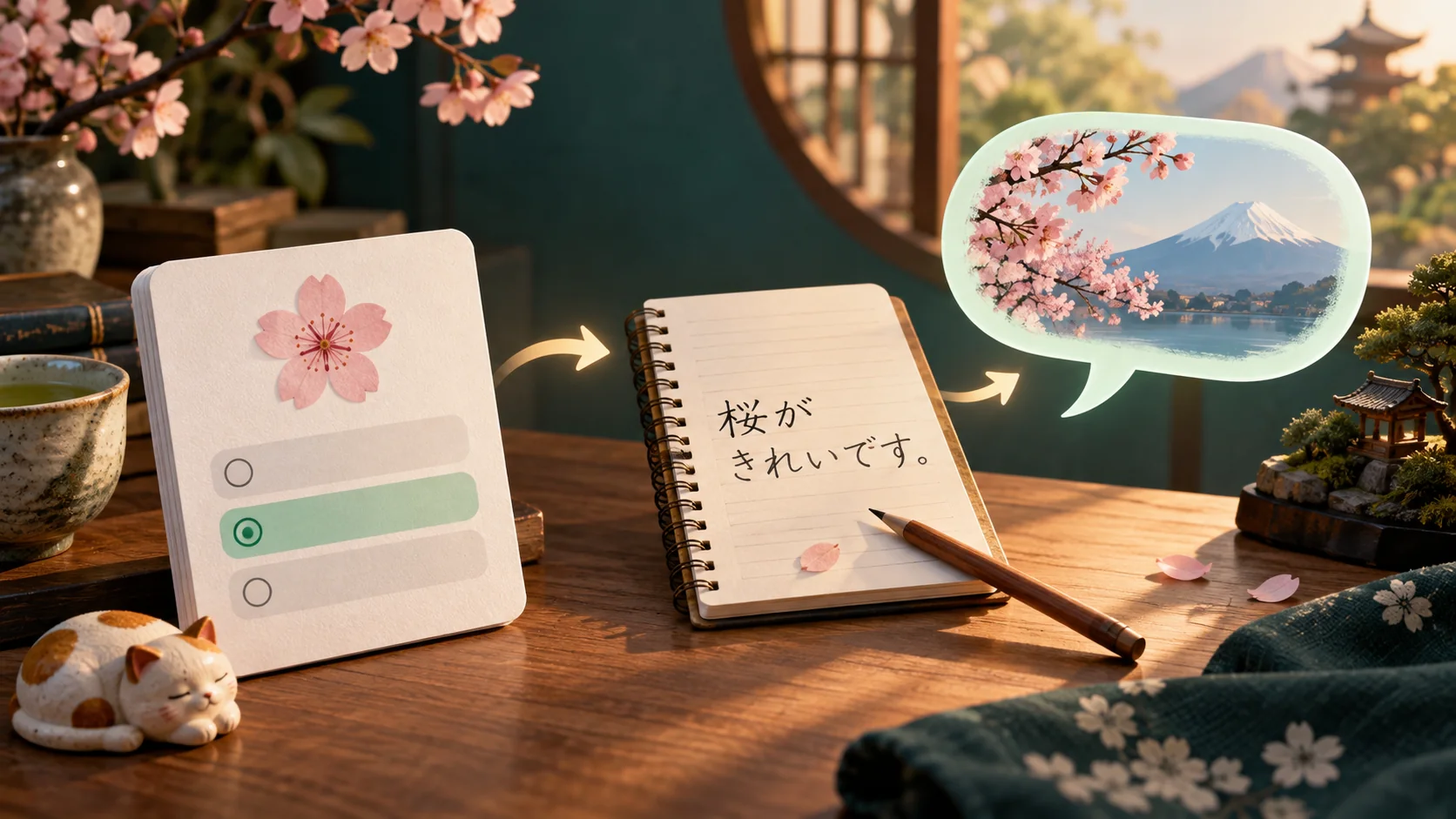
Qlango: turn a correct answer into a sentence you can use
Japanese is in Qlango’s catalog. Here is how to assess whether its practice fills a real gap in your study routine.

Reading Japanese Without Stopping at Every Line
A practical way to keep moving through Japanese text while still noticing readings, structure, and the words worth reviewing later.