
JAPANESE, ONE USEFUL IDEA AT A TIME
Read with furigana without letting it do every job
A three-pass reading routine that separates pronunciation, meaning and recall while keeping the text enjoyable.
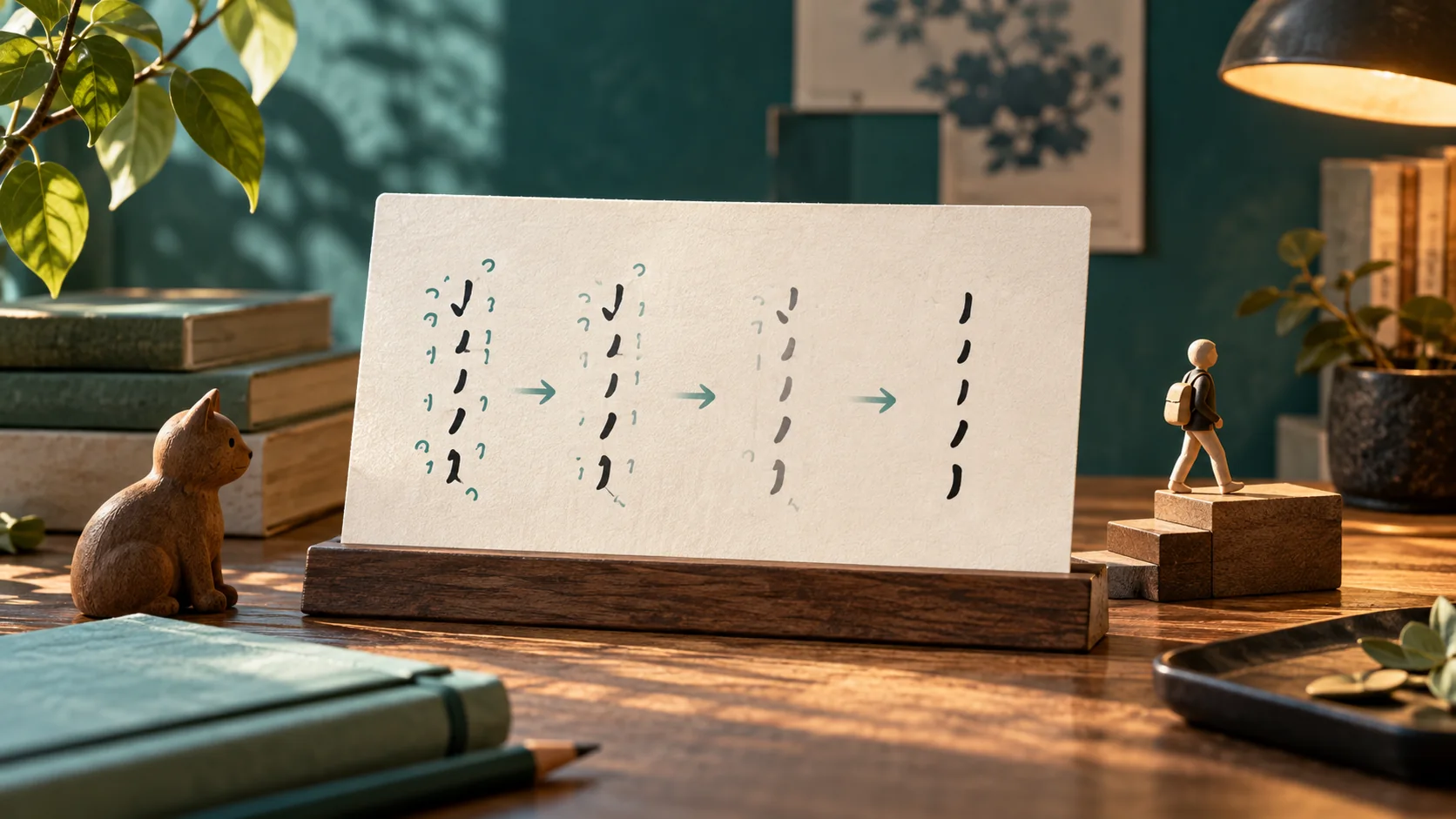
A three-pass reading routine that separates pronunciation, meaning and recall while keeping the text enjoyable.
Furigana is a useful support
Furigana gives you a reading above or beside a kanji. That can keep a paragraph moving when you know a word by sound but cannot recognize its written form yet. It is not cheating. It also does not automatically tell you what the sentence means. Being able to pronounce every character and understanding the message are different checks.
On Manabi Kōbō, the English or Spanish column gives you another kind of support. You now have several places your eyes can go: translation, Japanese word, furigana. Rather than trying to hide everything at once, give each part a job. The goal is to make choices while reading, not to win a contest for using the fewest hints.
First pass: follow the message
Read one short paragraph with the support visible. When a word is unfamiliar, use the furigana to connect its written shape to a pronunciation. If the meaning is still unclear, glance at the translation and return immediately to Japanese. Do not remain in the left column and count that as reading the right one.
Try this original example: 今日は雨なので、家で本を読みます。 “Because it is raining today, I will read a book at home.” Check the relationship, not just the nouns. Rain is the reason; reading at home is the plan. If you only collect 雨, 家 and 本, you miss what the sentence is doing.
Second pass: predict before peeking
Choose just two words whose readings you want to practice. Cover their furigana with a finger or a small piece of paper, then try reading them in the sentence. Reveal the support and correct yourself. You do not need a special interface setting for this exercise.
Keep the word in context. 生 has several readings, so recognizing it in 学生 does not guarantee the right reading in 生まれる. Your practice item should be the word or phrase, with its actual reading, rather than a promise that one pronunciation works everywhere. If a generated reading looks odd, check a reliable dictionary before rehearsing it repeatedly.
Third pass: say what happened
Cover the whole paragraph and explain the message in your own words. English or Spanish is fine for this comprehension check. Then make one small Japanese change: replace 本 with 記事, or 家 with 図書館 if the new situation makes sense. That tells you whether you understood the structure or only recognized a familiar visual pattern.
Do not remove furigana from every article because one exercise went well. Use more support for harder material and less for a small, familiar passage. Reading something interesting today and practicing independent recall on two words can coexist.
A simple next reading
Open the Side by Side Reader and select one manageable passage. Record three things: its main point, two readings you checked and one sentence you changed. If you need almost every word translated, choose a shorter passage next time. If everything is effortless, try covering a little more support. Adjust the task to keep the meaning within reach.
ふりがなを使いながら、自分で読む力も育てる
ふりがなは役立つ補助
ふりがなは漢字の上や横に読み方を示します。音では知っているのに字では分からない語があっても、段落を読み進めやすくなります。ずるい方法ではありません。ただし、すべて発音できることと、文の意味が分かることは別です。
Manabi Kōbōでは英語やスペイン語の欄も助けになります。訳、日本語の単語、ふりがなと、目を向ける場所がいくつもあります。一度に全部隠すのではなく、それぞれの役割を決めましょう。ヒントの少なさを競うのではなく、自分で判断しながら読む練習です。
一回目は内容を追う
短い一段落を、補助を見ながら読みます。知らない語はふりがなで字と音を結び付けます。それでも意味が分からなければ訳を見て、すぐ日本語に戻ります。左の欄だけを読んで、右の欄も読めたことにしないようにします。
例文は「今日は雨なので、家で本を読みます。」です。名詞だけでなく関係を確認します。雨が理由で、家で本を読むことが予定です。「雨」「家」「本」だけを集めると、文の働きを見落とします。
二回目は見る前に思い出す
読みを練習したい二語だけ選び、指や紙でふりがなを隠して、文の中で読んでみます。その後に見せて確認します。特別な画面設定は必要ありません。
文脈を残すことが大切です。「生」には複数の読みがあり、「学生」で分かっても「生まれる」を正しく読めるとは限りません。一字に一つの発音を固定せず、単語や表現を実際の読みと一緒に練習します。自動生成された読みが不自然なら、繰り返す前に信頼できる辞書で確認しましょう。
三回目は内容を説明する
段落全体を隠し、自分の言葉で内容を説明します。理解の確認なので、英語やスペイン語でもかまいません。次に「本」を「記事」にするなど、日本語の情報を一つ変えます。状況に合うなら「家」を「図書館」にしてもよいでしょう。構造を理解したか、見慣れた形を覚えただけか確かめられます。
一回うまくできたからといって、すべての記事からふりがなを外す必要はありません。難しい文章では多めに助けを使い、慣れた短い文章で少なくします。面白い内容を読むことと、二語だけ自力で思い出すことは両立できます。
次に読むとき
Side by Side Readerで無理のない文章を選び、要点、確認した二語の読み、変更した一文を残します。ほぼ全語の訳が必要なら、次は短くします。簡単すぎれば補助を少し隠します。意味に手が届くよう、課題の大きさを調整しましょう。
Put this idea into practice
Keep reading

Reading Japanese Without Stopping at Every Line
A practical way to keep moving through Japanese text while still noticing readings, structure, and the words worth reviewing later.
Furigana as Scaffolding, Not a Destination
Furigana is most useful when it keeps you inside authentic Japanese text while your kanji recognition catches up.
Ask which platform in Japanese, then check your train
Ask for the train to your destination, recognize platform numbers, and check the service with a fictional station exercise.