
JAPANESE, ONE USEFUL IDEA AT A TIME
Fujii Kaze and Japanese listening: enjoy the song, then study one small detail
A listening routine for Fujii Kaze fans that separates musical phrasing from everyday speech.
A listening routine for Fujii Kaze fans that separates musical phrasing from everyday speech.
The song does not need to become homework
Fujii Kaze is one of the artists I enjoy, and that is already a good reason to keep Japanese in your day. You do not need to turn every favorite song into a vocabulary spreadsheet. Start with the official site and its official listening links. Pick a song because you want to hear it again, not because someone promised it was the perfect level.
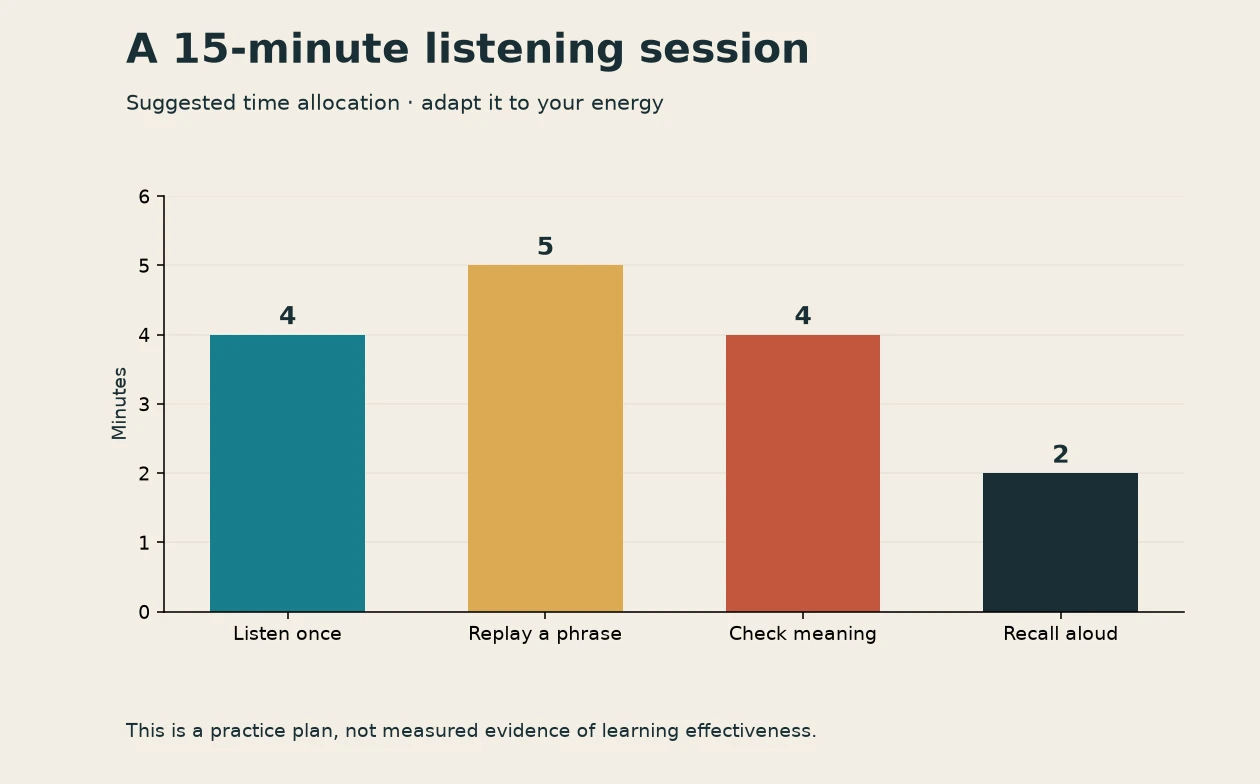
Listen once without pausing. Afterwards, describe the experience in a few words: calm, energetic, surprising, difficult to follow. This first pass gives you something to say. Understanding every line is a separate project, and you can leave it for another day.
Choose one listening question
On the second pass, ask one narrow question: where does a phrase seem to end? Listen for a breath, a pause or a change in the melody. Mark the timestamp rather than copying the whole passage. If you use lyrics, use an authorized source and check only the small section you are studying.
Singing can stretch vowels and place words across a musical beat. That makes a recording interesting, but it also means you should not treat the timing of a sung line as a template for ordinary conversation. For a pronunciation check, compare a word with a normal spoken dictionary example. If the word still sounds different, write down the difference instead of deciding that your ears are broken.
Write your own reaction
These are original practice sentences, not lyrics: この曲をもう一度聞きたいです。 “I want to listen to this song again.” 声が好きです。 “I like the voice.” 静かな場所で聞きました。 “I listened in a quiet place.” Choose the one that is true for you and change a detail.
Notice the useful difference between 曲 and 声. One sentence comments on the song; the other comments on the voice. You can also change 聞きたいです to 聞きました to move from a wish to a completed action. That small change gives you a reusable conversation pattern without needing to reproduce the artist's words.
A concrete starting point: Kirari
If you want a specific place to begin, the official catalog has a page for Kirari / きらり. Follow its official listening options, then give yourself a small question before playback: can you locate where the voice enters, and where the first phrase ends? You can answer that without claiming to understand the entire song.
Keep the title separate from a translation of the lyrics. A title is a useful search key, but it is not a summary of every line. After listening, write この曲の始まりが好きです。 “I like the beginning of this song,” only if that is your actual reaction. If another section stood out, change the sentence to describe that section.
Stop while you still like the song
Keep one observation and one original sentence. Try rebuilding the sentence tomorrow in the Sentence Builder, then listen for enjoyment again. Your progress check is specific: can you hear the boundary you marked, and can you explain your reaction? A song can remain a favorite even when parts of it are still beyond your Japanese.
Artist reference and official listening routes: Fujii Kaze official website. This article offers a personal study routine; it does not claim that a particular song guarantees faster learning.
藤井風の音楽で日本語を聞く:まず楽しみ、一つだけ練習する
曲を全部宿題にしなくていい
藤井風は私が好きなアーティストの一人です。それだけでも、毎日の中に日本語を置く理由になります。好きな曲をすべて単語表に変える必要はありません。公式サイトと、そこから案内される音源を使いましょう。難易度が完璧だと言われた曲より、また聞きたい曲を選びます。
最初は止めずに聞きます。その後、「落ち着く」「元気が出る」「意外だった」「聞き取りにくい」など、短く感想を言います。この一回で話す内容ができます。歌詞の全行を理解する作業は、別の日にしても大丈夫です。
聞く目的を一つ決める
二回目は「句がどこで終わるように聞こえるか」など、一つだけ確かめます。息継ぎ、間、旋律の変化を聞き、全文を書き写さずに時刻をメモします。歌詞を確認する場合は正規の提供元を使い、勉強している短い部分に絞ります。
歌では母音を伸ばしたり、拍に合わせて言葉を配置したりします。その表現は魅力ですが、歌の時間の取り方をそのまま日常会話の手本にはできません。発音を確かめたい語は、辞書などの普通の話し声と比べます。違って聞こえるなら、自分の耳を責めずに違いをメモしましょう。
自分の感想を作る
次は歌詞ではなく、練習用に作った文です。「この曲をもう一度聞きたいです。」「声が好きです。」「静かな場所で聞きました。」自分に当てはまる文を選び、一つ情報を変えてみましょう。
「曲」と「声」では、何について感想を述べるかが変わります。「聞きたいです」を「聞きました」にすれば、希望から終わった行動へ変わります。アーティストの言葉を再現しなくても、この小さな変更で会話に使える型を練習できます。
具体的な入口:「きらり」
具体的な入口が欲しければ、公式カタログの「きらり」のページを使えます。正規の音源を選び、声が入る場所と最初の句が終わる場所を探してみましょう。曲全体を理解したと言わなくても答えられる課題です。
曲名と歌詞の訳は分けて考えます。曲名は検索に便利ですが、全行の要約ではありません。実際にそう感じたら「この曲の始まりが好きです」と書きます。別の部分が印象に残ったなら、その部分に合わせて文を変えてください。
曲を楽しめるところで終える
観察を一つ、自分の文を一つ残します。翌日はSentence Builderで文を作り直し、また楽しむために聞きます。確かめるのは、印を付けた区切りが聞こえるか、自分の感想を説明できるかです。理解できない部分があっても、好きな曲であることは変わりません。
アーティスト情報と正規の音源への入口は藤井風公式サイトです。これは学習手順の提案で、特定の曲による学習速度の向上を保証するものではありません。
Put this idea into practice
Keep reading
A 15-minute Japanese listening session with a clear finish line
Pick a short clip, test one prediction and keep an honest record of what you heard.
Better Japanese Anki cards: keep the context, shrink the question
Turn an overloaded Japanese flashcard into a clear recall task, with original examples and a practical rule for editing frustrating cards.
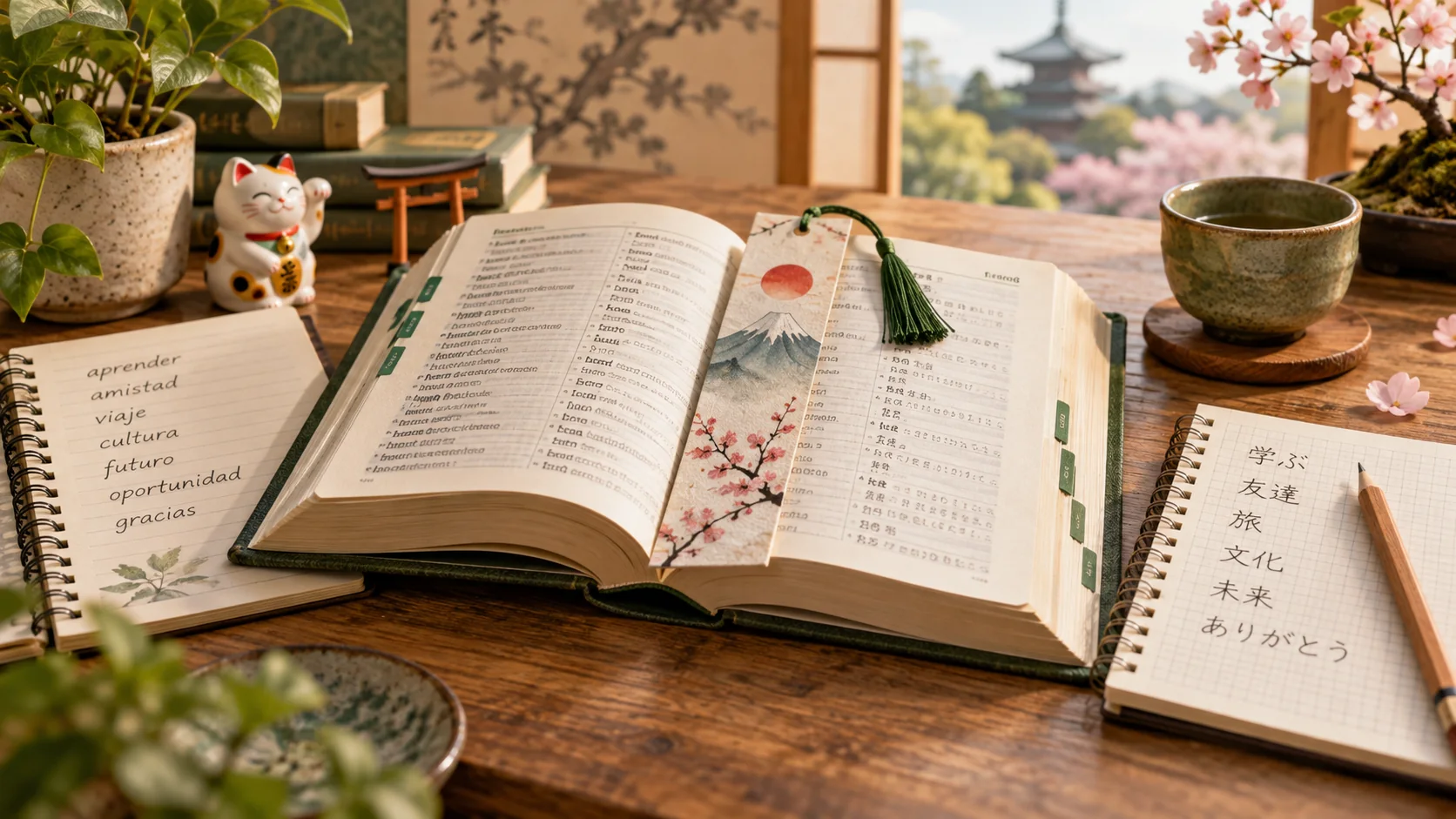
DiccionarioJaponés.com: a useful Japanese–Spanish companion from Matías Acosta
A shoutout to Matías Acosta, plus a practical way to turn a Spanish dictionary lookup into Japanese you can actually use.